12 esoteric traditions, explained in 12 paintings
Twelve traditions that shaped Western and Islamic mystical thought, each in one slide: what it believed, where it came from, and a classic artwork from its world. Paintings are public domain via Wikimedia Commons.
12 esoteric traditions, explained in 12 paintings
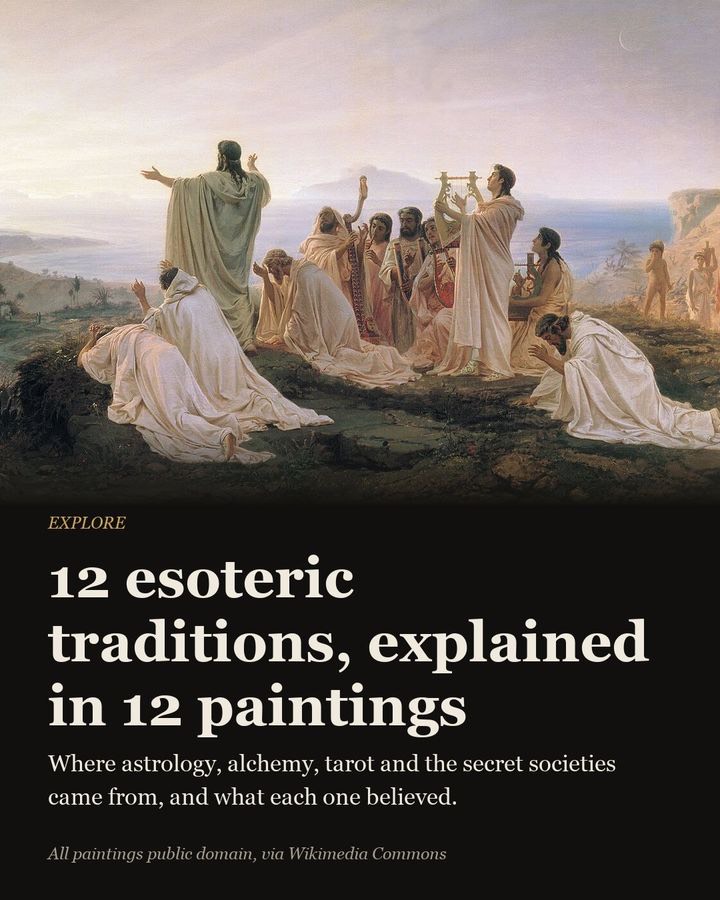
Where astrology, alchemy, tarot and the secret societies came from, and what each one believed.
All paintings public domain, via Wikimedia Commons
Astrology
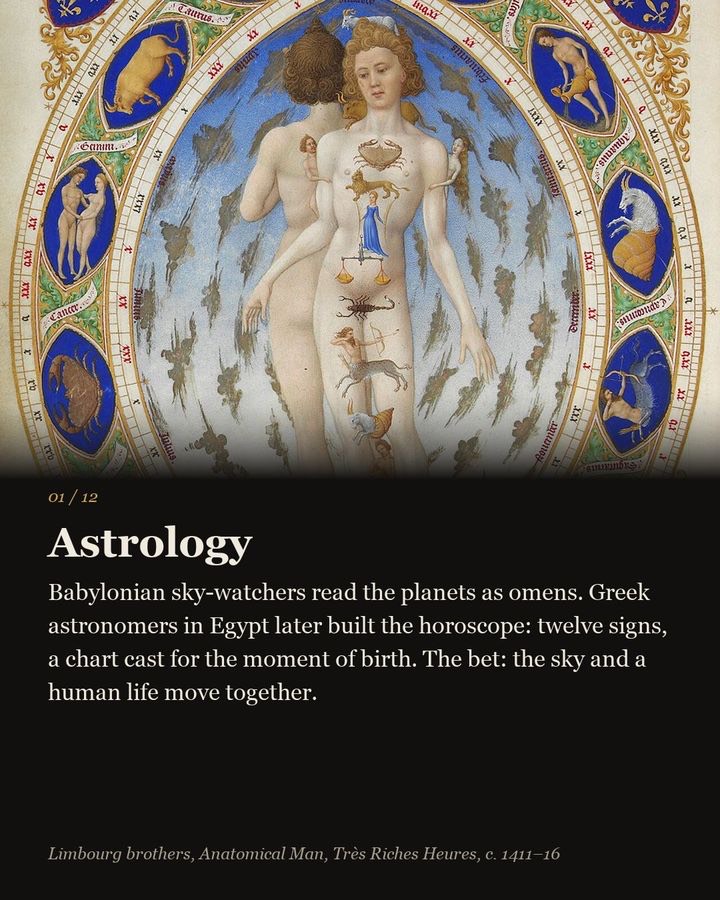
Babylonian sky-watchers read the planets as omens. Greek astronomers in Egypt later built the horoscope: twelve signs, a chart cast for the moment of birth. The bet: the sky and a human life move together.
Limbourg brothers, Anatomical Man, Très Riches Heures, c. 1411-16
Pythagoreanism
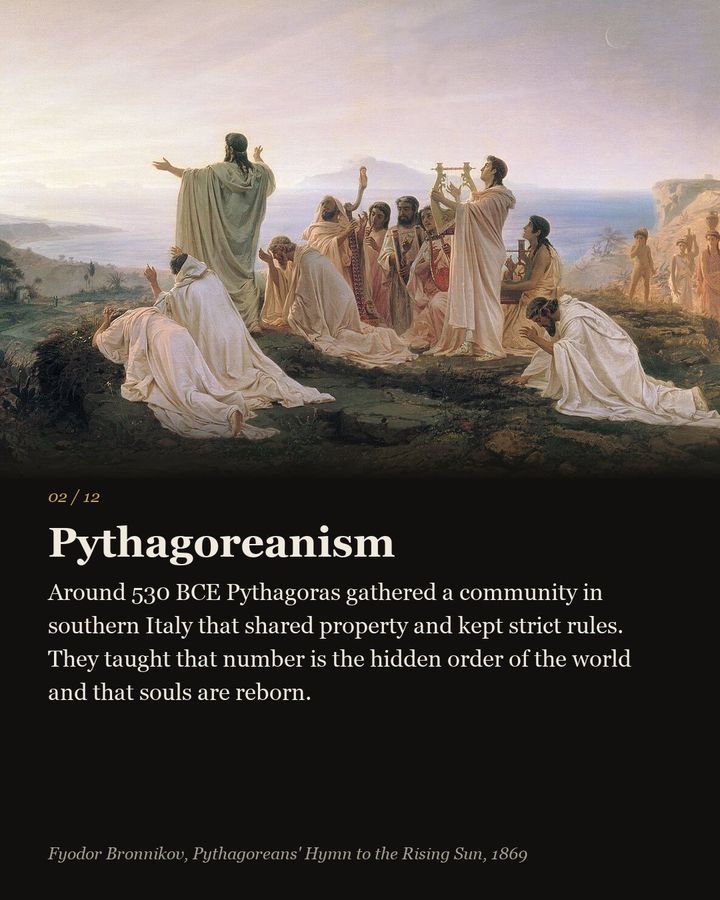
Around 530 BCE Pythagoras gathered a community in southern Italy that shared property and kept strict rules. They taught that number is the hidden order of the world and that souls are reborn.
Fyodor Bronnikov, Pythagoreans' Hymn to the Rising Sun, 1869
Hermeticism
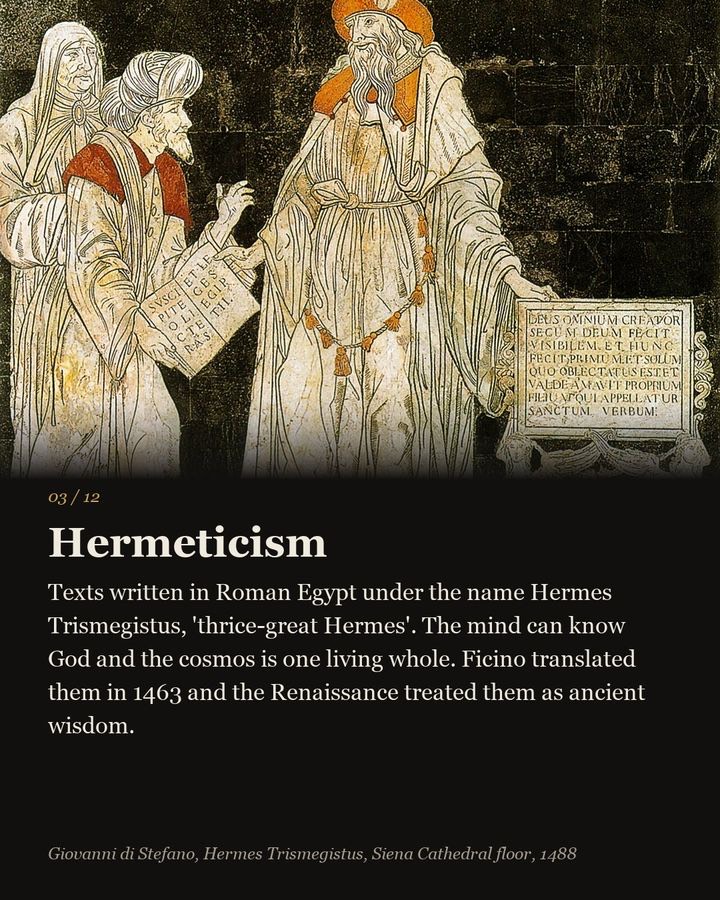
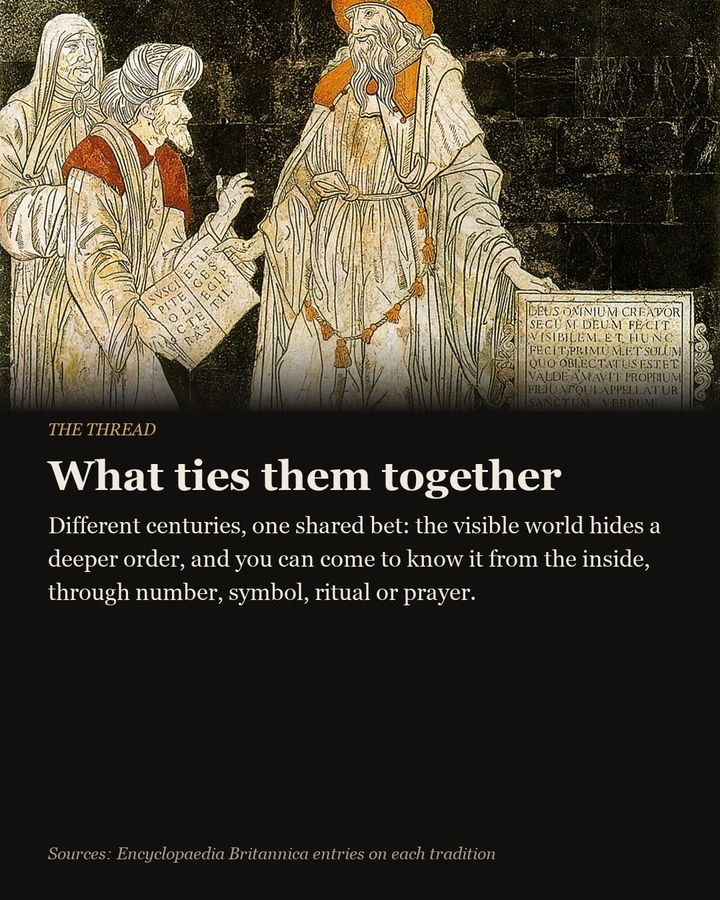
Texts written in Roman Egypt under the name Hermes Trismegistus, 'thrice-great Hermes'. The mind can know God and the cosmos is one living whole. Ficino translated them in 1463 and the Renaissance treated them as ancient wisdom.
Giovanni di Stefano, Hermes Trismegistus, Siena Cathedral floor, 1488
Gnosticism
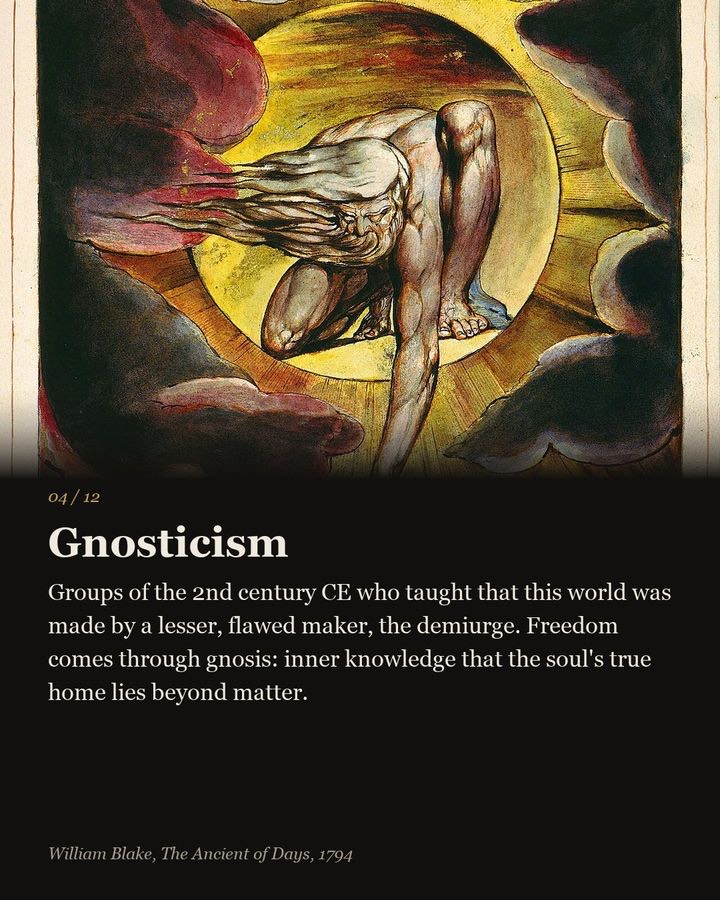
Groups of the 2nd century CE who taught that this world was made by a lesser, flawed maker, the demiurge. Freedom comes through gnosis: inner knowledge that the soul's true home lies beyond matter.
William Blake, The Ancient of Days, 1794
Neoplatonism
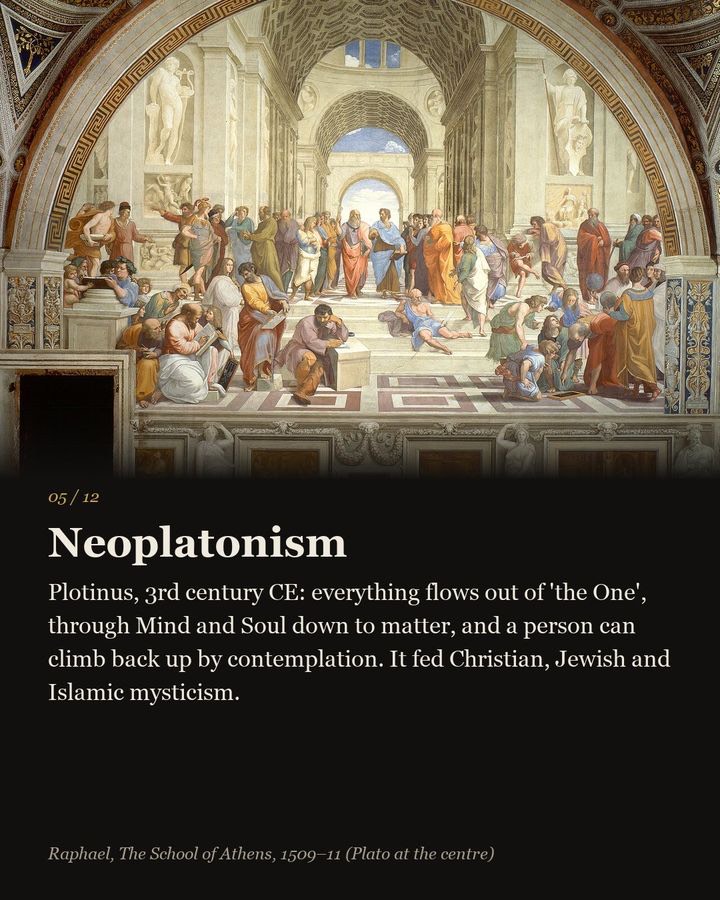
Plotinus, 3rd century CE: everything flows out of 'the One', through Mind and Soul down to matter, and a person can climb back up by contemplation. It fed Christian, Jewish and Islamic mysticism.
Raphael, The School of Athens, 1509-11 (Plato at the centre)
Sufism
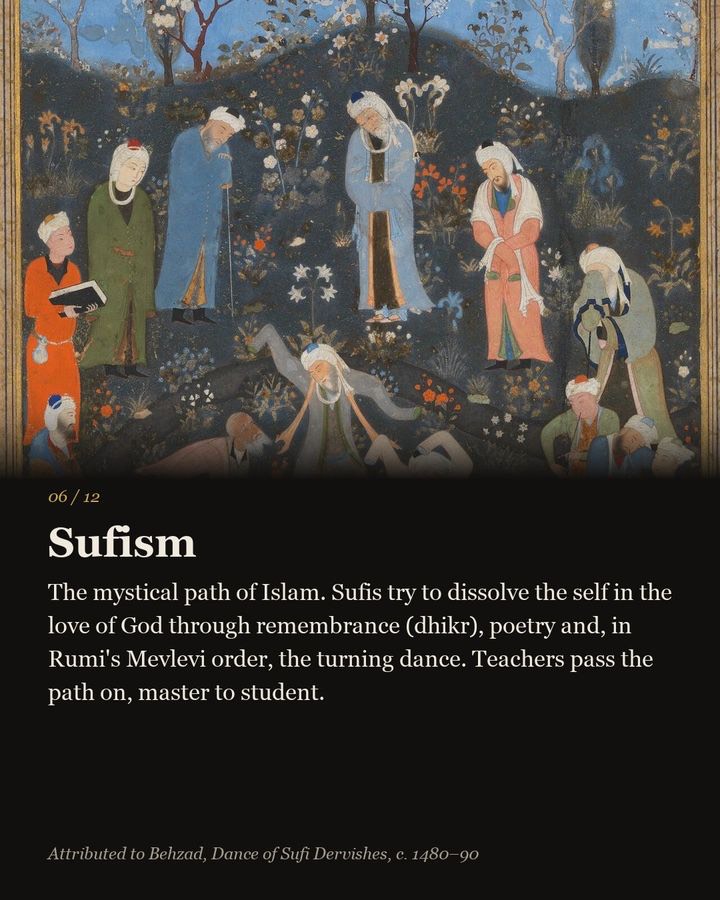
The mystical path of Islam. Sufis try to dissolve the self in the love of God through remembrance (dhikr), poetry and, in Rumi's Mevlevi order, the turning dance. Teachers pass the path on, master to student.
Attributed to Behzad, Dance of Sufi Dervishes, c. 1480-90
Kabbalah
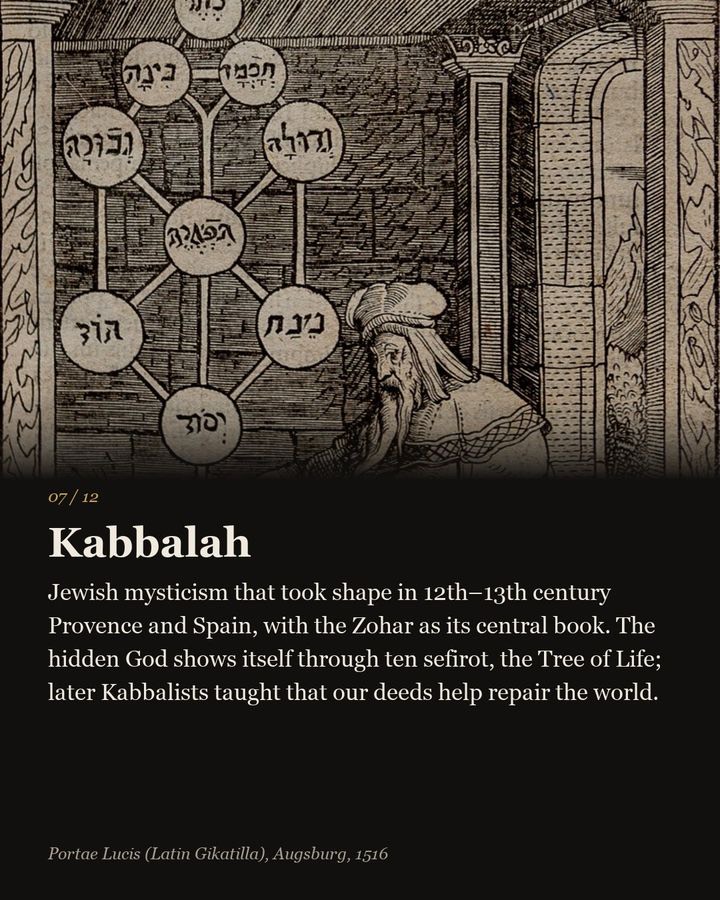
Jewish mysticism that took shape in 12th-13th century Provence and Spain, with the Zohar as its central book. The hidden God shows itself through ten sefirot, the Tree of Life; later Kabbalists taught that our deeds help repair the world.
Portae Lucis (Latin Gikatilla), Augsburg, 1516
Alchemy
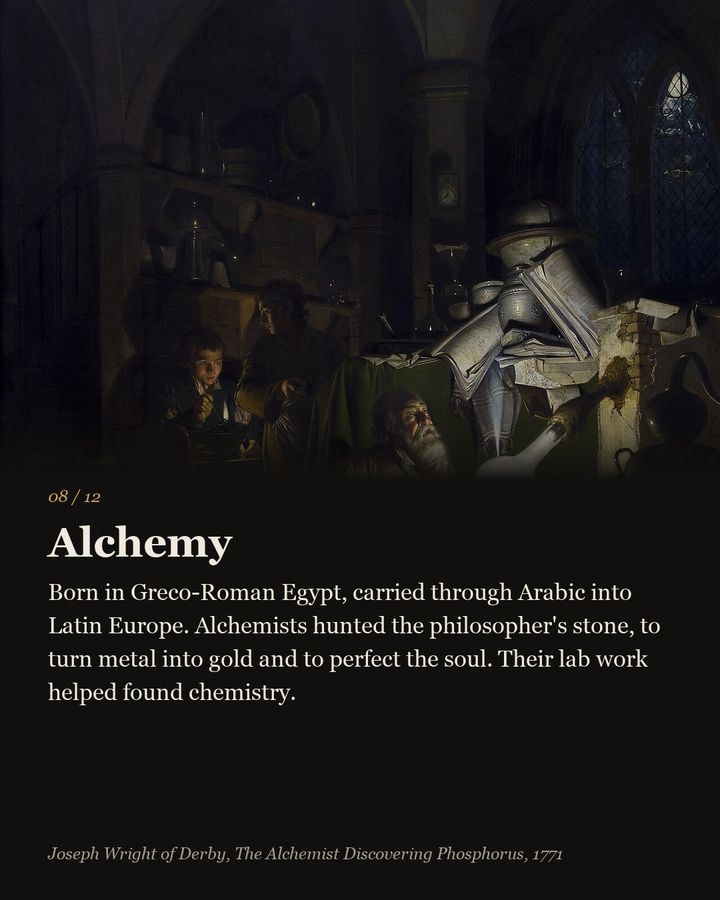
Born in Greco-Roman Egypt, carried through Arabic into Latin Europe. Alchemists hunted the philosopher's stone, to turn metal into gold and to perfect the soul. Their lab work helped found chemistry.
Joseph Wright of Derby, The Alchemist Discovering Phosphorus, 1771
Tarot
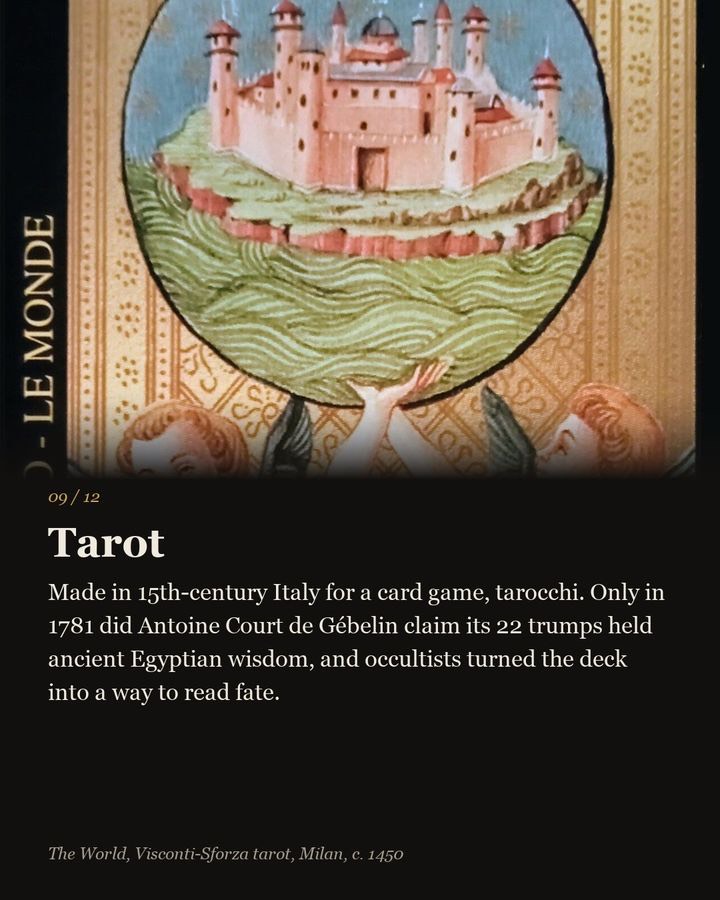
Made in 15th-century Italy for a card game, tarocchi. Only in 1781 did Antoine Court de Gébelin claim its 22 trumps held ancient Egyptian wisdom, and occultists turned the deck into a way to read fate.
The World, Visconti-Sforza tarot, Milan, c. 1450
Rosicrucianism
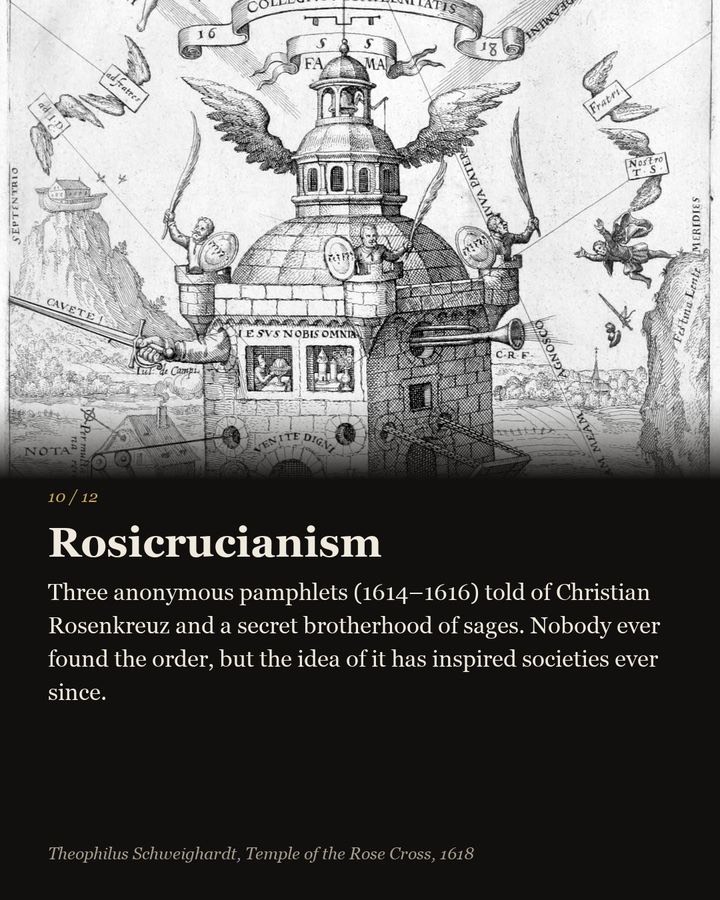
Three anonymous pamphlets (1614-1616) told of Christian Rosenkreuz and a secret brotherhood of sages. Nobody ever found the order, but the idea of it has inspired societies ever since.
Theophilus Schweighardt, Temple of the Rose Cross, 1618
Freemasonry
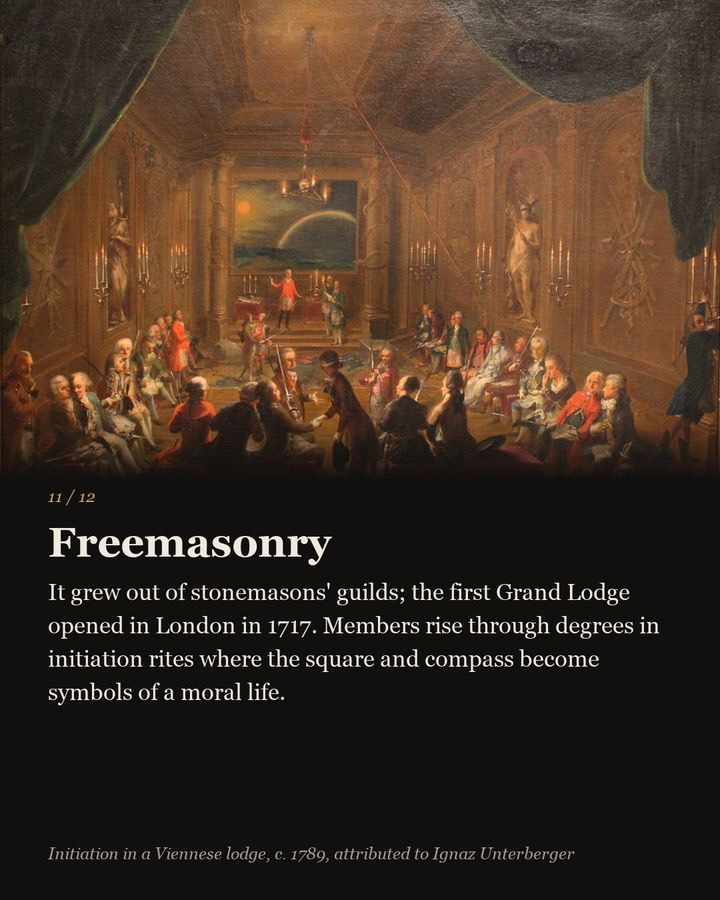
It grew out of stonemasons' guilds; the first Grand Lodge opened in London in 1717. Members rise through degrees in initiation rites where the square and compass become symbols of a moral life.
Initiation in a Viennese lodge, c. 1789, attributed to Ignaz Unterberger
Theosophy
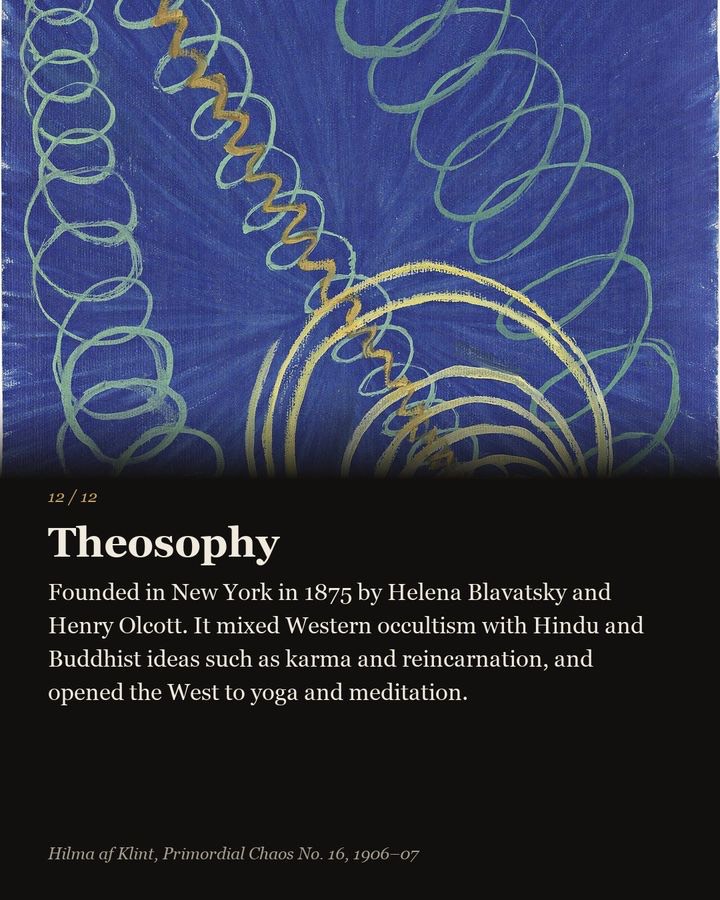
Founded in New York in 1875 by Helena Blavatsky and Henry Olcott. It mixed Western occultism with Hindu and Buddhist ideas such as karma and reincarnation, and opened the West to yoga and meditation.
Hilma af Klint, Primordial Chaos No. 16, 1906-07
What ties them together
Different centuries, one shared bet: the visible world hides a deeper order, and you can come to know it from the inside, through number, symbol, ritual or prayer.
Sources: Encyclopaedia Britannica entries on each tradition
Sources: britannica.com (entries per tradition); paintings public domain via Wikimedia Commons


